



IL-15
Interleukin-5 (IL-5) is a key cytokine that orchestrates the differentiation, survival, and activation of eosinophils[1][2]. Mechanistically, IL-5 signals through the IL-5 receptor (IL-5R), a heterodimer composed of a unique α subunit and a shared βc subunit, triggering JAK/STAT, PI3K, and MAPK pathways to modulate immune responses[3][4]. In disease models, IL-5 drives eosinophilic inflammation in asthma, hypereosinophilic syndrome, and other allergic conditions, serving as a validated biomarker and therapeutic target[5][6]. Compared with related cytokine isoforms such as IL-3 and GM-CSF, IL-5 exhibits selective potency toward eosinophils, with minimal effects on neutrophils or basophils[3][7]. Pharmacologic inhibition of IL-5 using monoclonal antibodies or receptor antagonists effectively reduces eosinophil counts and mitigates tissue inflammation in preclinical and clinical studies[5][6]. For experimental applications, IL-5 agonists are utilized to expand eosinophil populations in vitro and in vivo, facilitating mechanistic studies of allergic inflammation and immune regulation[2][8]. Collectively, IL-5 serves as a central mediator in eosinophil biology, linking receptor-specific signaling to disease pathogenesis and therapeutic intervention strategies[1][5][6].
References:
- [1]. Philbin VJ, et al. Imidazoquinoline Toll-like receptor 8 agonists activate human newborn monocytes and dendritic cells through adenosine-refractory and caspase-1-dependent pathways. J Allergy Clin Immunol. 2012;130(1):195-204.e9. [Content Brief]
- [2]. Elias M, et al. IL-36 in chronic inflammation and fibrosis - bridging the gap? J Clin Invest. 2021;131(2):e144336. [Content Brief]
- [3]. Queen D, et al. Function and Regulation of IL-36 Signaling in Inflammatory Diseases and Cancer Development. Front Cell Dev Biol. 2019;7:317. [Content Brief]
- [4]. Wagener B M, et al. Synergistic inhibition of β2-adrenergic receptor–mediated alveolar epithelial fluid transport by Interleukin-8 and transforming growth factor-β[J]. Anesthesiology, 2015, 122(5): 1084-1092.
- [5]. Boutet MA, et al. IL-36, IL-37, and IL-38 Cytokines in Skin and Joint Inflammation: A Comprehensive Review of Their Therapeutic Potential. Int J Mol Sci. 2019;20(6):1257. [Content Brief]
- [6]. Penna G, et al. The vitamin D receptor agonist elocalcitol inhibits IL‐8‐dependent benign prostatic hyperplasia stromal cell proliferation and inflammatory response by targeting the RhoA/Rho kinase and NF‐kB pathways[J]. The Prostate, 2009, 69(5): 480-493.
- [7]. Foreback J L, et al. Blood mononuclear cell production of TNF-α and IL-8: engagement of different signal transduction pathways including the p42 MAP kinase pathway[J]. Journal of leukocyte biology, 1998, 64(1): 124-133.
- [8]. Speer EM, et al. Pentoxifylline, dexamethasone and azithromycin demonstrate distinct age-dependent and synergistic inhibition of TLR- and inflammasome-mediated cytokine production in human newborn and adult blood in vitro. PLoS One. 2018;13:e0196352. [Content Brief]
All Product Categories
-
IL-15 Related Products (10)
Related Products (10)

-
Recombinant Proteins (18)
-
Ritlecitinib
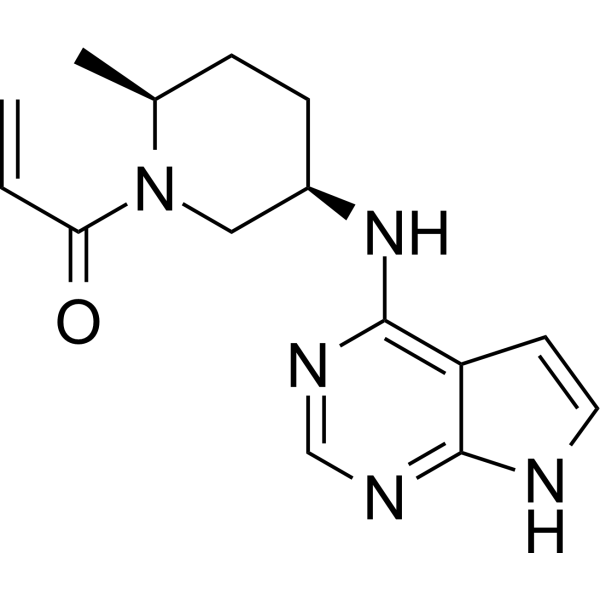 0 ImagesSynonyms: PF-06651600Ritlecitinib (PF-06651600) is a highly selective, orally active, irreversible covalent JAK3 inhibitor (IC50=33 nM) without inhibitory activity towards JAK1, JAK2, and TYK2 (IC50 >10 μ M). Ritlecitinib rapidly inactivates the JAK3 kinase, and blocks signaling and downstream STAT phosphorylation mediated by common gamma chain cytokines such as IL-2 and IL-15. Ritlecitinib can inhibit Th1/Th17 cell differentiation and function, and effectively suppress preclinical animal models such as alopecia areata, adjuvant-induced arthritis (AIA), and experimental autoimmune encephalomyelitis (EAE).
-
Elaidic acid
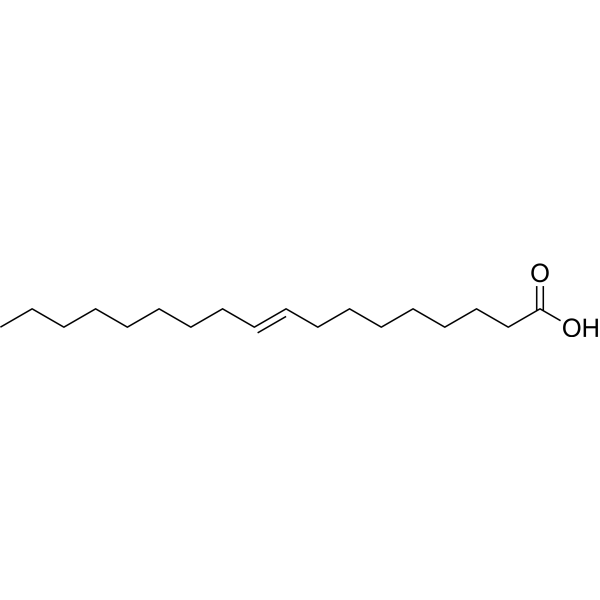 0 ImagesElaidic acid is an orally active trans fatty acid. Elaidic acid enhances the stemness of colorectal cancer cells by activating the Wnt/ERK1/2 pathway, thereby promoting cell proliferation, invasion and metastasis, and inhibiting apoptosis. Elaidic acid also inhibits the growth of Lactobacillus and alters the cell surface hydrophobicity of Lactobacillus. Elaidic acid reduces basal 2-deoxyglucose uptake in muscle cells and adipocytes. Elaidic acid can be used in research on colorectal cancer, insulin and other related areas.
-
Ordesekimab
 0 ImagesSynonyms: AMG 714; PRV-015Ordesekimab (AMG 714; PRV-015) is a fully human IgG1κ anti-IL-15 (Interleukin Related) monoclonal antibody. The binding of Ordesekimab to IL-15 inhibits the interaction of IL-15 with the IL-2Rβ and common γ chain of the IL-15 receptor complex, but not with the IL-15Rα chain. Ordesekimab has the potential for study of nonresponsive celiac disease (NRCD).
-
Y-320
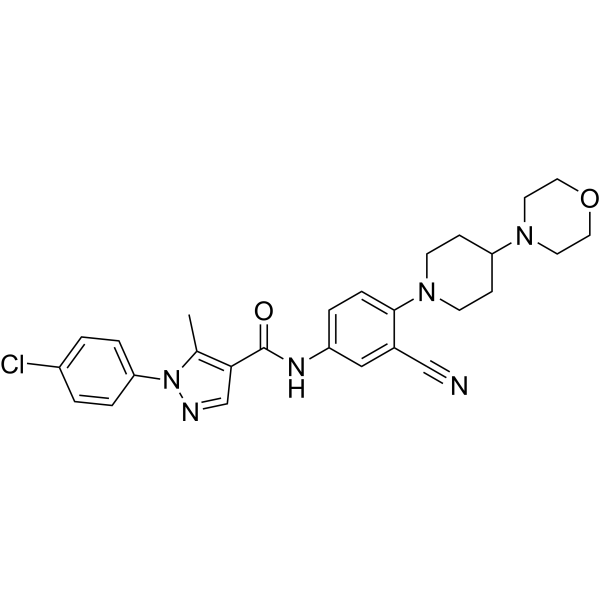 0 ImagesY-320 is a potent, orally active phenylpyrazoleanilide immunomodulator. Y-320 inhibits IL-17 production by CD4 T cells stimulated with IL-15 with IC50 values of 20 to 60 nM. Y-320 enhances TP53, DMD, and COL17A1 PTC readthrough by G418 and increases cellular protein levels and protein synthesis. Y-320 concomitants use of with a low dose of Paclitaxel (HY-B0015) significantly sensitized multidrug resistance (MDR) tumors by inducing G2/M phase arrest and apoptosis. Y-320 can be used for research of rheumatoid arthritis (RA) and cancer.
-
HuMax-IL15
 0 ImagesCat. No.: HY-P992375HuMax-IL15 is a human IgG1 monoclonal antibody against IL-15. HuMax-IL15 is applicable to the research of rheumatoid arthritis. The recommended isotype control is human IgG1 kappa (HY-P99001).
-
(DL)-3,5-Dimethyltyrosine
 0 ImagesCat. No.: HY-189364CAS No.: 88262-44-6Synonyms: SMC247-9(DL)-3,5-Dimethyltyrosine (SMC247-9) is a selective APOBEC3B inhibitor optimized from SMC247, with an IC50 of 50 pM. (DL)-3,5-Dimethyltyrosine binds to the APOBEC3B protein, reduces intracellular APOBEC3B protein abundance partially through a lysosome-dependent pathway, enhances IL-15 expression in tumor cells, and relieves the suppression of CD8+ T cells by tumor cells in an IL-15-dependent manner. (DL)-3,5-Dimethyltyrosine attenuates tumor- and macrophage-derived chemokine-mediated macrophage chemotaxis and inhibits pathological myeloid inflammatory signaling. (DL)-3,5-Dimethyltyrosine inhibits tumor growth in the immune checkpoint blockade-responsive MC38 syngeneic mouse model and produces synergistic effects with anti-PD-L1 in the immune checkpoint blockade-resistant TC-1 tumor model; it also ameliorates anti-PD-1-exacerbated DSS-induced colitis-like intestinal inflammatory injury. (DL)-3,5-Dimethyltyrosine can be used in research related to tumor immunotherapy.
-
Ritlecitinib tosylate
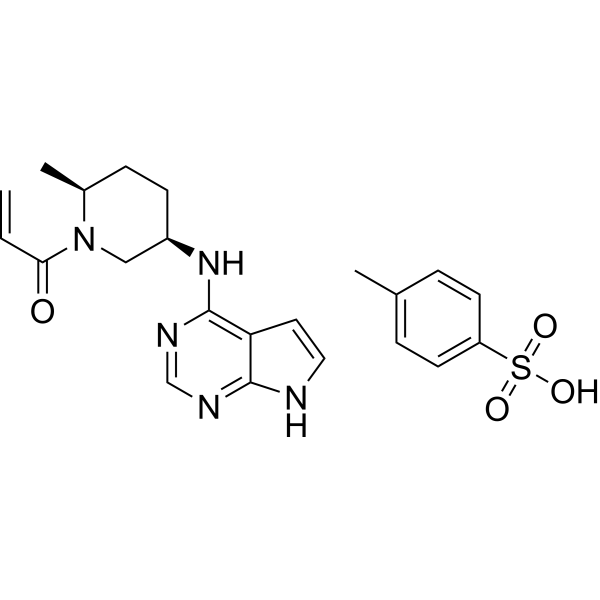 0 ImagesSynonyms: PF-06651600 tosylateRitlecitinib (PF-06651600) tosylate is a highly selective, orally active, irreversible covalent JAK3 inhibitor (IC50=33 nM) without inhibitory activity towards JAK1, JAK2, and TYK2 (IC50 >10 μ M). Ritlecitinib tosylate rapidly inactivates the JAK3 kinase, and blocks signaling and downstream STAT phosphorylation mediated by common gamma chain cytokines such as IL-2 and IL-15. Ritlecitinib tosylate can inhibit Th1/Th17 cell differentiation and function, and effectively suppress preclinical animal models such as alopecia areata, adjuvant-induced arthritis (AIA), and experimental autoimmune encephalomyelitis (EAE).
-
Patiromer
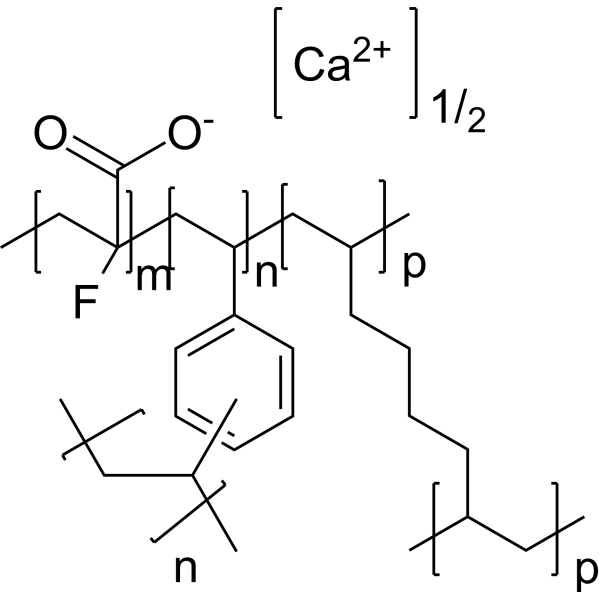 0 ImagesCat. No.: HY-112961CAS No.: 1208912-84-8Patiromer is an orally active, selective and non-absorbable intestinal potassium (K+) polymer binder that reversibly binds potassium ions in exchange for calcium (Ca2+). Patiromer can rapidly and continuously reduce serum potassium levels, maintain a normal blood potassium state, and reduce serum aldosterone levels. Patiromer also increases fecal potassium excretion. Patiromer is mainly used in the study of hyperkalemia associated with diseases such as chronic kidney disease, diabetes, and heart failure, and is particularly suitable for improving renin-angiotensin-aldosterone system inhibitor (RAASi) therapy.
-
Ritlecitinib malonate
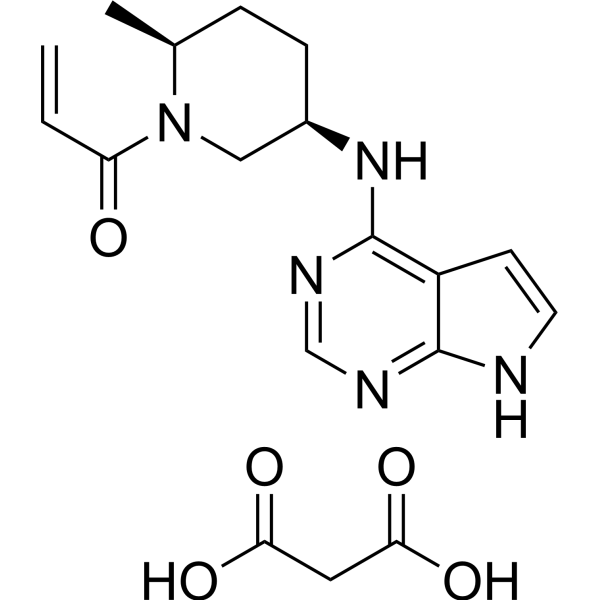 0 ImagesCat. No.: HY-100754ACAS No.: 2140301-97-7Synonyms: PF-06651600 malonateRitlecitinib (PF-06651600) malonate is a highly selective, orally active, irreversible covalent JAK3 inhibitor (IC50=33 nM) without inhibitory activity towards JAK1, JAK2, and TYK2 (IC50 >10 μ M). Ritlecitinib malonate rapidly inactivates the JAK3 kinase, and blocks signaling and downstream STAT phosphorylation mediated by common gamma chain cytokines such as IL-2 and IL-15. Ritlecitinib malonate can inhibit Th1/Th17 cell differentiation and function, and effectively suppress preclinical animal models such as alopecia areata, adjuvant-induced arthritis (AIA), and experimental autoimmune encephalomyelitis (EAE).




